Immigration client status updates: an RCIC's routine
What the Code of Professional Conduct says about keeping clients informed, the moments that call for a written update, and a simple routine a small RCIC practice can keep.
"Any update on my file?" arrives by email, WhatsApp and voicemail, often for a file where nothing has changed. Answering each one by hand eats your week. Not answering is worse, because keeping clients informed is a written duty under the Code. A small routine for immigration client status updates fixes both.
This guide is for licensed RCICs. It sets out what the Code says, then a practical routine you can run with a team of one to three.
What the Code actually says
The Code of Professional Conduct (SOR/2022-128) puts this duty in section 22(3), under the marginal note "Keeping client informed":
(3) The licensee must provide timely information to the client in writing concerning the status of their case, including by
(a) notifying the client when a document or information has been submitted or received on the client's behalf; and
(b) on request, providing a copy of the documents that were submitted or received.
Three related provisions sit around it:
| Section | Text |
|---|---|
| 22(1)(c) | The licensee must "communicate with the client in a timely and effective manner" |
| 22(1)(f) | "if applicable, provide instructions and guidance on how the client may access online information regarding their application, expression of interest or proceeding, including any associated processing information" |
| 24(3)(t) | The service agreement must include "a statement that the licensee will provide timely information related to the status of the client's case" |
Note what the text does not say. It does not set a frequency or a channel, beyond "in writing". How you meet "timely" is a judgment you make and should be able to explain. This guide does not interpret the Code further than its words. If you need a ruling on your own practice, ask the College.
When to send immigration client status updates
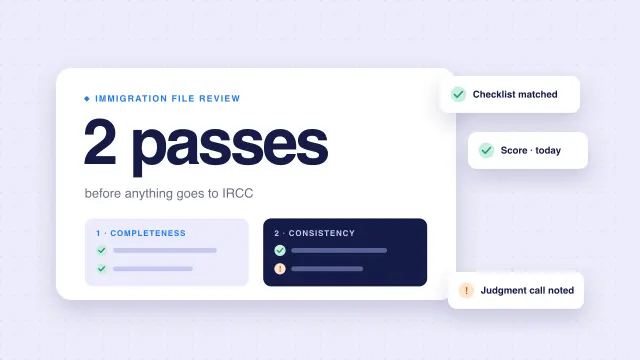
Section 22(3)(a) names two triggers directly: something submitted, and something received. In an Express Entry file, these moments usually qualify. The "submitted" update comes after your own final check; our pre-submission review checklist covers that step.
| Moment | Why it matters | What to say |
|---|---|---|
| Service agreement signed | Sets expectations | What happens next, what you need from them, how you will update them |
| Documents received from the client | 22(3)(a): received on their behalf | What arrived, what is still missing |
| Profile submitted to the pool | 22(3)(a): submitted | That it is in, and what that means for them |
| Invitation to apply received | Starts the 60-day clock | The deadline date, and the documents now needed |
| Application submitted | 22(3)(a): submitted | Date submitted, and how to see status online (22(1)(f)) |
| Any request or letter from IRCC | 22(3)(a): received | What IRCC asked for, by when, and what you need from the client |
| Any change of plan | Timely and effective communication | What changed and why |
| Decision | Received | The outcome and the next step |
IRCC also asks applicants to report certain changes, such as a new job, new language results or a change in family. An update to the client is a good moment to ask whether any of these happened.
Add a quiet-file check-in
Event updates leave long silences while IRCC processes a file. Those silences generate the "any update?" messages. A fixed check-in, written into your process, answers the question before it is asked.
Pick a rhythm you will keep. Put it in the service agreement in plain words. A missed promise looks worse than a modest one kept.
A template you can reuse
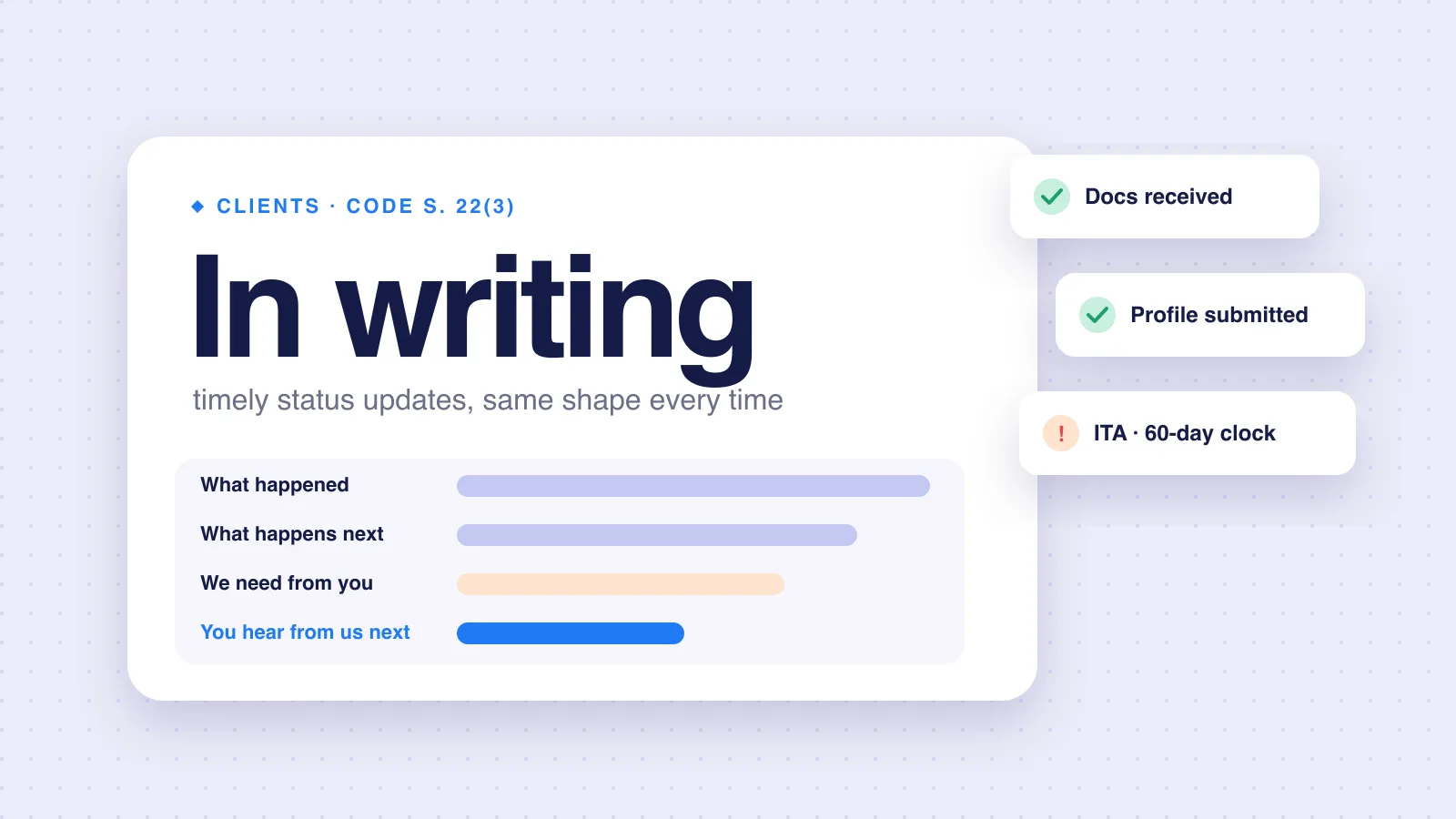
Keep updates short and the same shape every time. Clients learn where to look.
Your file: [status in five words]
What happened: [one or two sentences, with the date]
What happens next: [the next step and who does it]
What we need from you: [specific items and a date, or "Nothing right now"]
When you will hear from us next: [an event or a date]
The last line does the most work. It tells the client when to stop wondering.
Keep the record
Section 22(3) asks for updates "in writing". Section 37 of the Code requires a "reliable system of office administration". Together, they point to one habit: keep every update in the client's file, dated, so you can show what was sent and when.
A few practical rules for a small team:
-
One channel for updates
Pick email or a portal message. Chats on personal phones are hard to file and hard to find later.
-
One owner per file
If an assistant sends updates, section 38(2) still makes you responsible for their work. Review the template and spot-check.
-
Copies on request
Under 22(3)(b), keep submitted and received documents where you can send a copy the same day.
-
Log IRCC correspondence the day it lands
The update to the client should go out the same day or the next.
Cut the questions at the source
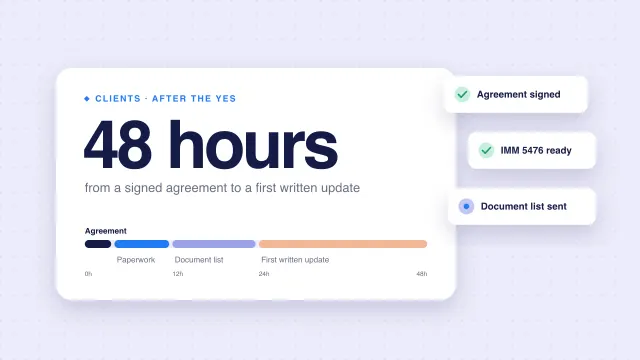
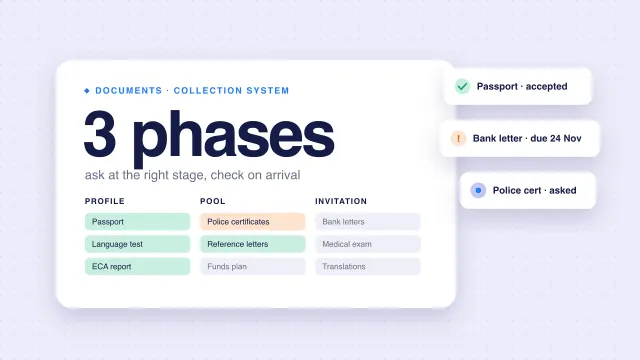
Many status questions are really document questions: "Did you get my bank letter?" If the client can see what you have received and what is still missing, that question goes away. Our guide to immigration document collection covers this side. For the first update on a new file, see client onboarding in the first 48 hours.
How rcicaxis handles this
rcicaxis does not send status-update emails for you. What it gives you is a client portal under your firm's name, where each client sees their own case, their submit-by date, the documents they have uploaded and one message thread with your office. You write the update in that thread, and it stays with the case. Staff-only notes sit beside it and the client never sees them.
Questions
Does the Code require RCICs to send status updates in writing?
Yes. Section 22(3) of the Code says the licensee must provide timely information to the client in writing concerning the status of their case, including notifying them when a document or information has been submitted or received on their behalf.
How often should I update an immigration client?
The Code says "timely" and does not set a schedule. One workable approach: send an update at each event, plus a fixed check-in so a quiet file still gets a note. Pick a rhythm, write it into your process and keep to it.
Does a client have the right to copies of what I submitted?
Section 22(3)(b) says the licensee must, on request, provide a copy of the documents that were submitted or received.
Does rcicaxis send status-update emails to clients?
No. Clients see their case, their deadline and a message thread with your office in the portal. You write the updates.
Sources
- Code of Professional Conduct for College of Immigration and Citizenship Consultants Licensees (SOR/2022-128)
- IRCC: Express Entry, after you apply
Code text and IRCC facts checked against the sources above on November 10, 2026. This is practice guidance, not legal advice.